Central America Leadership Initiative
We are a network composed of people with recognized leadership whose capabilities are strengthened in a two-year process to enrich the vision and leadership capabilities of its members in order to contribute to improving the economic and social situation in Central America.
The Central America Leadership Initiative (CALI) was founded in 2004 with support from the Aspen Institute, the Central American Institute of Business Administration (INCAE Business School), the Business Foundation for Social Action (FUNDEMAS), and the non-profit organization TechnoServe.
By being part of The Aspen Global Leadership Network (AGLN), our Fellows are part of a community of more than 3,200 leaders, businessmen and entrepreneurs from more than 50 countries.
CALI invests in human capital through a strategic program of four training seminars to connect and cultivate change agents committed to achieving inclusive development in Central America.

Mission
Develop leaders with solid values committed to proactively face social challenges, individually and collectively, to create a more just and equitable Central America.

Vision
Create a community with more than 400 leaders committed to the region by the year 2025.

Values
Confidentiality.
Tolerance and respect.
Service.
Compassion.
Transparency.
Intentionality.
Diversity.
Honesty.
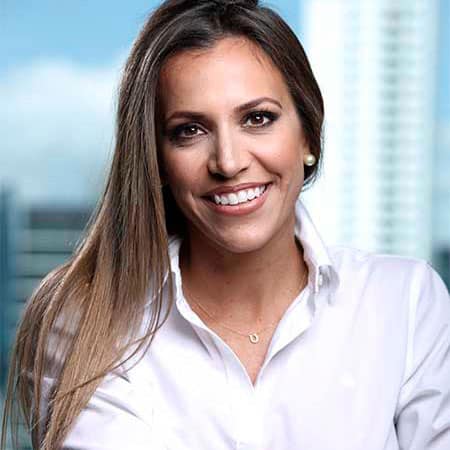
Ana María Vallarino
Executive Director
Foundation of CALI
Fellow Clase 10
OUR TEAM
Became executive director of the CALI Foundation in 2022 and has been part of its network of Fellows since 2014. Her trajectory in Panamanian real estate and hotel development goes hand in hand with efforts in favor of a gender equitable society and a socially responsible business practice.
She chairs the VerdeAzul Foundation, thus generating employment in the interior of Panama and educational projects for children and youth in vulnerable communities. She studied Arts with a major in Sociology at the University of Virginia, and recently became a certified Health Coach and yoga teacher. With her children, Ana Gabriela, Diego Andres, and Sofia Alexandra, she shares her passion for sports, the arts, travel, wellness, and the love of nature.
Actualmente también preside la Fundación VerdeAzul, brazo de Responsabilidad Social Empresarial de GVA, una entidad pionera en la generación de empleos en el interior del país y de proyectos educativos para niños y jóvenes de las comunidades aledañas.
Ana María retornó a Panamá en 2004, tras obtener su Licenciatura en Artes, con una especialización en Sociología, de la Universidad de Virginia. Aceptó el reto de coordinadora de eventos de Grupo Pompa, compañía líder en el país en la organización de eventos corporativos y sociales, de la que fue copropietaria hasta el 2008.
Durante la pandemia de Covid-19, se certificó como Health Coach en el Institute for Integrative Nutrition y como profesora de yoga con Marjan Harbison del Rasa Yoga Collective.
Todo lo anterior, Ana María lo conjuga en el rol más importante de su vida: ser madre de Ana Gabriela, Diego Andrés y Sofía Alexandra, con quienes comparte en los deportes, las artes, los viajes, y un estilo de vida pensado en el bienestar y amor a la naturaleza.
Board of Directors
FELLOWS
Our model inspires change that starts with the personal transformation of Fellows, their professional and social purpose. Since our inception in 2005, we have trained more than 350 Fellows in the region, people who are stepping forward to get involved in solving relevant problems in their societies. Upon joining the program, Fellows become part of the Aspen Global Leadership Network (AGLN), a worldwide community of more than 3,200 leaders from different sectors in more than 50 countries.
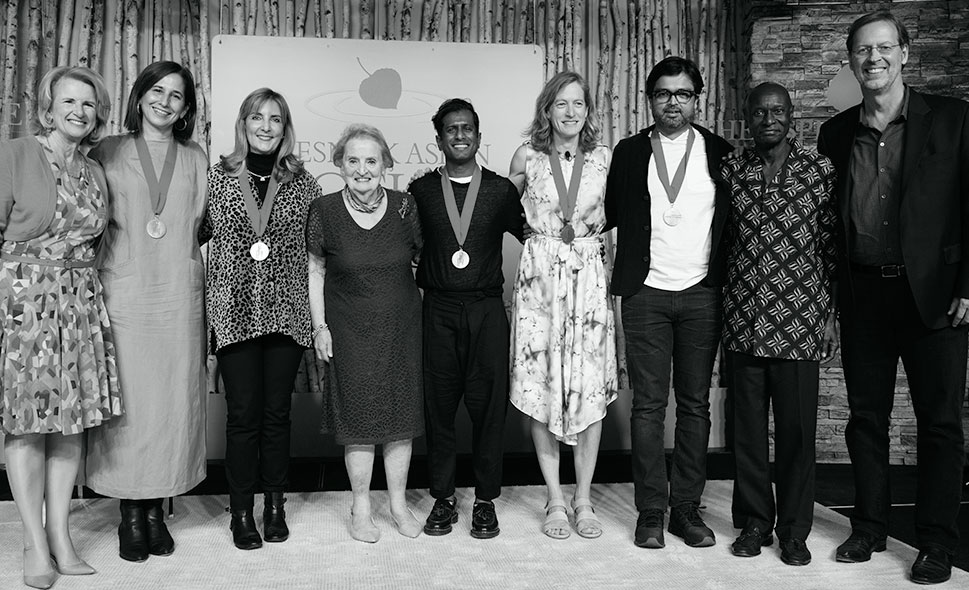
The CALI moderators
The moderators are essential to facilitate dialogue, discussion and reflection based on the texts selected by the AGLN. They stimulate diverse, fluid, and meaningful conversation among Fellows about heterogeneous points of view from their experiences, practices and knowledge.
Part of the work of the moderators is to ensure the plurality of voices that leads to reflection, consider new approaches and evaluate challenges and circumstances from a global perspective. Moderators must ensure a fair and participatory debate.
Moderator training lasts two years; in that period, they develop their own style, they learn to interpret selected readings, and how to connect them to real circumstances.
Our active community of moderators is engaged and growing. Their key performance will allow the growth of the Fellows and the construction of transformative leadership.